



For years, the way I’ve been using Google felt predictable. I’d type a question, often phrased awkwardly (“best coffee shop near me open now”), and Google would return its famous list of ten blue links. Businesses try to be on the top of that list. It involved a lot of navigating between tabs, piecing together information, and hoping users would click their link over someone else’s. But I’ve watched that ritual completely change. Now, when you ask a question, you often get a direct answer right at the top of the page. This is a massive shift in how we find information, and from my experience, it requires a whole new way of thinking. This is where Answer Engine Optimization (AEO) comes in, and the key to winning at it is structured data.
Key Takeaways
- Think Answers, Not Just Links: AEO is about providing direct answers to users’ questions so search engines can feature your content in rich results like featured snippets and “People Also Ask” boxes.
- Structured Data is Your Translator: Structured data is the most effective way to translate your website’s content into a language search engines can instantly understand, removing all guesswork.
- The Goal is Trust and Visibility: Using structured data correctly doesn’t just improve your chances of being featured; it also builds trust with users and Google, signaling that you are an authoritative source.
What is AEO?
AEO stands for Answer Engine Optimization.
For a long time, we focused on Search Engine Optimization – SEO – which was all about getting your website to rank high on a results page. AEO is the next step. It’s no longer about being in the list of links; it’s about being the answer.
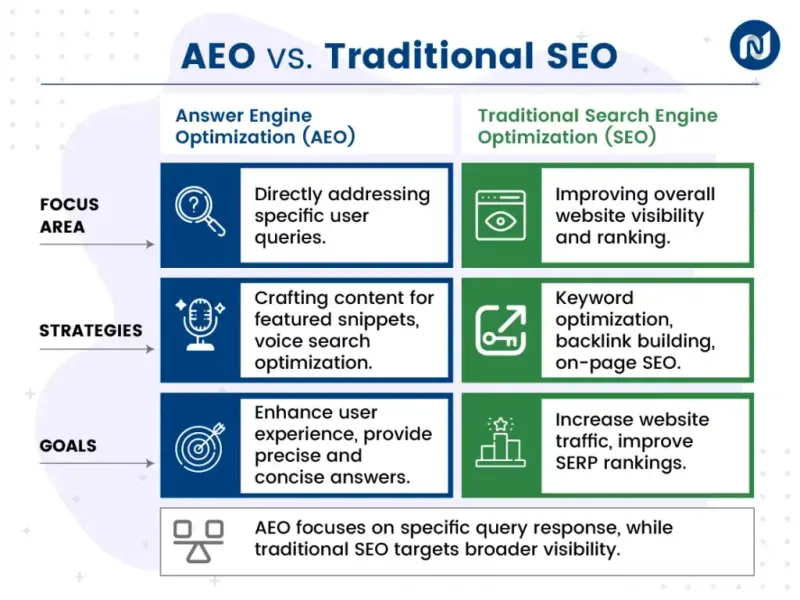
When you see a featured snippet, a recipe card with cooking times, or a dropdown list of questions and answers directly on Google, that’s AEO in action. A company has successfully optimized its content to directly answer a query, and Google has rewarded it with that prime real estate.
What’s the Need to Improve AEO Results?
From my perspective, improving AEO results is no longer optional. You need it for survival and growth online. Here’s why I believe it’s so critical:
- Users Want Instant Gratification: We’re all busy. We want answers now, without having to click through multiple websites to find them.
- Voice Search is Driven by Answers: When you ask Alexa or Google Assistant a question, they don’t read you a list of websites. They give you one, direct answer. That answer comes from a source that has been optimized for AEO.
- You Build Authority: When Google uses your content as the official answer, it’s a massive vote of confidence. It tells everyone that you are a trusted, authoritative expert on that topic. If you’re not the one providing that direct answer, it’s a guarantee that your competitor will be.
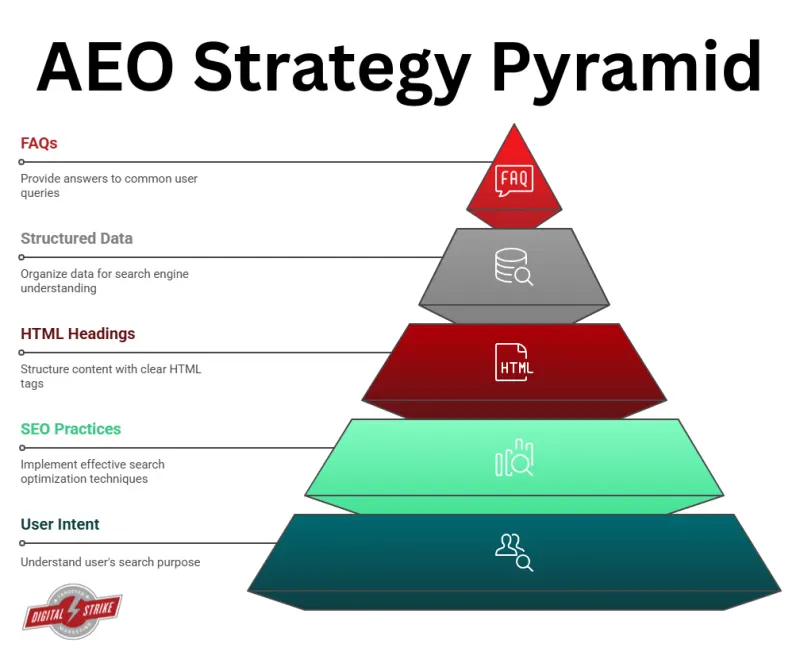
What is Structured Data?
Structured data as a term can sound technical and intimidating, but the concept is actually very simple.
Think of it as a label maker for your website.
Your webpage is full of information: a product name, a price, an address, or a list of frequently asked questions. To you and me, it’s obvious what each piece of information is. But to a search engine, it’s just a jumble of text and numbers.
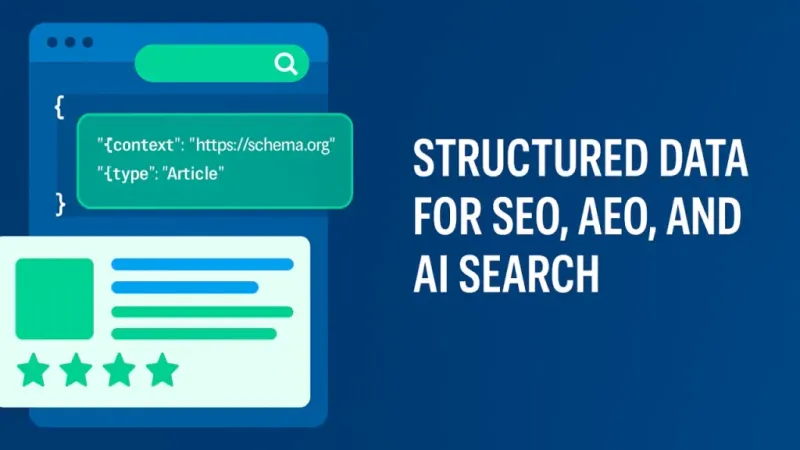
Structured data is a piece of code you add to your site that labels each of these elements. You’re explicitly telling Google, “Hey, this block of text is a question,” and “this text here is its answer.” You translate your content into a language search engines understand perfectly.
Why is Structured Data Important for AEO?
This is where everything clicks into place. Structured data is the bridge that connects your content to AEO results.
Without structured data, you’re asking Google to read your entire article and guess what the key information is. With structured data, there is no guesswork. You are handing Google the exact information it needs, perfectly formatted and ready to be served up as a rich result.
The way I see it, if you want to be featured in a recipe carousel, an FAQ dropdown, or a “how-to” guide on the search results page, using the correct structured data is the single most important step you can take. It’s your official application to be featured.
What are the Benefits of Using Structured Data?
Here’s a simple breakdown of the advantages I’ve consistently observed:
| The Benefit | What This Actually Means for You |
| Standout Visibility | Your search result is no longer just a plain blue link. It has transformed into a large, eye-catching box with images, ratings, or even an interactive Q&A section. If you make it to this box, you become almost impossible to ignore. |
| Higher Quality Clicks | By showing key info like price, availability, or review stars upfront, you attract people who are genuinely interested. This means more clicks from the right audience, not just random visitors. |
| Builds Unshakeable Trust (E-E-A-T) | When Google chooses your content for a featured answer, it’s like a public endorsement. This is one of the most powerful ways to signal to both users and Google that you are a true expert and a trustworthy source. |
| A Clear Competitive Edge | Many of your competitors probably aren’t doing this yet, or aren’t doing it well. Being an early adopter here can make your business the clear choice on a crowded results page. |
| Future-Proofs Your Content | Voice assistants like Alexa and Google Assistant need direct answers to function. The goal is to prepare for this future, and structured data is the key to being the voice that answers those spoken questions. |
| Improves Content Understanding | You’re not just hoping Google figures out your page; you’re telling it directly. This helps Google see you as an authority on a topic, which can improve your rankings on related queries over time. |
How to Implement Structured Data for Better AEO Results
Here is a simple, practical process you can follow. You don’t need to be a coding wizard to get started.
- Identify Your Opportunities: First, look at the content on a website. Are there product pages? An FAQ section? A blog with how-to guides or lists? These are all perfect candidates for structured data.
- Choose the Right Schema: Head over to Schema.org, which is the official library for all the “labels” we can use. If you have an FAQ page, look for the FAQPage schema. For a product, look for Product schema.
- Generate and Add the Code: You don’t have to write the code from scratch. I often use free tools like Google’s Structured Data Markup Helper. You just highlight parts of your page (like a question or a price) and tell the tool what it is. It then generates the code for you to add to your website’s HTML.
- Keep Testing: Before the work is done, you should always test it. My go-to tool is Google’s Rich Results Test. You can paste your code or URL into it, and it will tell you if Google understands it correctly and if it’s eligible for a rich result.
well as reliable next-gen AI experiences.
Final Thoughts
The internet is becoming less of a directory and more of a conversation. AEO is about leading that conversation in your area of expertise.
From everything I’ve seen, structured data is no longer a “nice-to-have” technical tweak. It’s a fundamental part of a modern digital strategy. It’s how we speak directly to search engines, build trust with users, and ensure our expertise is seen and heard in a very crowded digital world.
Once your pages are marked up and eligible to appear as direct answers, the next question is whether AI engines are actually citing them. AirOps was built for that gap. It tracks which URLs AI search engines pull from for the topics you care about, so you can see your citation rate, which competitors are showing up instead, and where new content gaps are opening.
That visibility feeds directly into action inside AirOps. Page360 connects citation and mention data back to GSC and GA4, so a schema change or a content refresh can be tied to a measurable shift in how AI engines represent your brand. Structured data gets a page in the door. Knowing what happens after, and where to focus next, is what turns AEO from a one-time implementation into a system that compounds.
Frequently Asked Questions (FAQs)
Is AEO just another name for SEO?
AEO is an evolution of SEO. While traditional SEO focuses on ranking your page, AEO focuses on getting your answer featured directly. The two work together, but AEO requires that extra step of structuring your content for direct answers.
Do I need to be a developer to add structured data?
Absolutely not. While a developer can help with complex implementations, tools like Google’s Markup Helper and various plugins for platforms like WordPress have made it accessible for marketers and business owners.
Will using structured data guarantee me a featured snippet?
No, there are no guarantees with Google. However, in my opinion, it is the single best thing you can do to make your content eligible and dramatically increase your chances. It’s about putting your best foot forward.